
Most people come in because they’re having trouble hearing, not because they’re worried about cognitive health. But the two are more connected than many people realize.
When conversations become difficult to follow, people often start avoiding situations they once looked forward to. A dinner with friends, a family gathering or even a casual conversation can feel more challenging than it used to.
Cognitive screening and auditory rehabilitation can help uncover challenges related to communication, memory or attention, and help guide next steps.
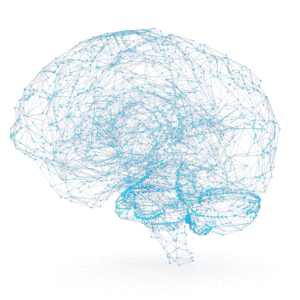
We Hear With Our Brains, Not Our Ears
Most people think hearing happens in the ears, but that’s only part of the process.
Your ears pick up sound and send it to your brain. From there, your brain figures out what those sounds mean. It’s what helps you recognize a familiar voice, follow a conversation and make sense of the world around you.
When hearing loss develops, the problem isn’t always that sounds disappear completely. Sometimes speech becomes less distinct or harder to follow, especially in places with background noise.
As a result, the brain has to work harder to keep up with conversations and fill in the parts that were missed. Many people notice this as listening fatigue.
Researchers believe this extra effort may be one reason hearing loss has been linked to cognitive decline. When your brain is constantly working to follow conversations, it has less energy to devote elsewhere.
Understanding Cognition and Cognitive Disorders
Cognition refers to the mental skills you rely on every day. These include attention, concentration, memory, reasoning, problem-solving and visuospatial skills, which help you understand the space and objects around you.
Cognition also includes executive functions, the skills that help you stay organized, manage your time and carry out everyday tasks.
A cognitive disorder occurs when one or more of these abilities begins to change. There are many factors that can influence cognitive health as people age, and researchers continue to study the relationship between hearing loss and cognition.
While some risk factors are outside of our control, untreated hearing loss is one area where early intervention may help reduce the impact on daily life.
Understanding the Risk: The Johns Hopkins Study
Researchers have spent years looking at the connection between hearing loss and cognitive decline. One of the most widely cited studies came from Johns Hopkins Medicine, where researchers followed 639 older adults for more than a decade.
What they found was hard to ignore:
- People with mild hearing loss were twice as likely to develop dementia.
- People with moderate hearing loss were three times more likely to develop dementia.
- People with severe hearing loss were five times more likely to develop dementia than those with normal hearing.
One reason this connection gets so much attention is that hearing loss often develops slowly. Many people adjust to small changes without realizing how much they’re missing.
Our Two-Step Approach to Hearing-Brain Longevity
Hearing care is about more than making sounds louder. That’s why we offer cognitive screening and auditory rehabilitation, which allow us to evaluate how hearing difficulties may be affecting communication, listening and day-to-day function.
Step 1: Cognitive Screening with Cognivue Thrive®
To better understand both hearing and cognitive function, we include Cognivue Thrive® cognitive screening in our evaluation process.
Cognivue Thrive is a non-invasive, self-administered computerized screening that takes about five minutes. It is not an IQ test or a long list of questions. You can complete it in our office, often during the same visit as your audiologic evaluation.
The screening measures three cognitive domains: Memory, Executive Function and Visuospatial Skills. It also measures two speed performance parameters: reaction time and processing speed.
Once you finish the test, a simple one-page report is generated right away. The report includes:
- Immediate and easy to understand results
- A brain health score for each domain and performance parameter
- Examples of how your results may impact daily activities
- Secure and confidential handling of your information
Our board-certified hearing instrument specialist (BC-HIS) reviews the results and discusses what they may mean for you and your hearing health.
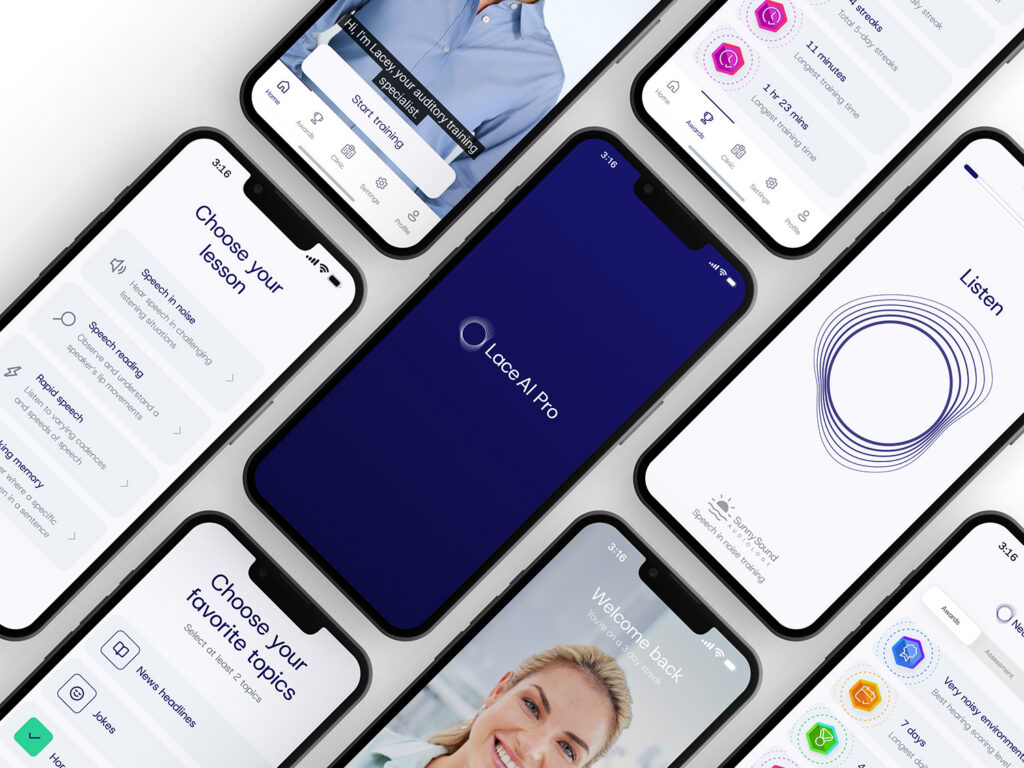
Step 2: Auditory Therapy with LACE® AI
Sometimes the challenge isn’t hearing sound. It’s following conversations in places where there’s background noise, multiple speakers or other distractions. In those situations, auditory training may help improve listening and communication skills.
LACE® AI (Listening and Communication Enhancement) is a home-based auditory training program that uses short daily exercises to help strengthen listening abilities. The program adapts as you progress, adjusting the level of difficulty based on your performance.
Most exercises can be completed in about 15 minutes a day. The training focuses on skills that many people find challenging, including:
- Following a conversation when there’s background noise
- Keeping up with people who speak quickly
- Managing situations where multiple sounds compete for your attention
- Understanding speech in busy social settings
- Getting more benefit from hearing aids in challenging listening environments
LACE AI can be used on its own or as part of a broader hearing care plan. Throughout the process, we monitor your progress and make recommendations based on how you’re doing with the program.
The Benefits You Can Expect
The purpose of cognitive screening and auditory rehabilitation is to address challenges that may be affecting both hearing and communication.
While results vary from person to person, many people notice improvements in situations that had become frustrating, tiring or difficult. Some of the benefits may include:
- Better hearing: Follow conversations more easily in noisy places and keep up with fast-paced talkers.
- Sharper mind: Strengthen memory, attention and other cognitive skills involved in processing information and communication.
- Increased confidence: Feel more comfortable participating in conversations, social activities and group settings with less frustration.
Many people don’t realize how much effort they’ve been putting into listening until communication starts to feel easier again.
Take Control of Your Cognitive Health Today
Hearing plays an important role in how we communicate, stay socially active and interact with the world around us. That’s why we look beyond hearing alone, offering cognitive screening and auditory rehabilitation as part of a more comprehensive approach to care.
If you’d like to learn more about your hearing and cognitive health, contact our office to schedule an evaluation. We’re here to answer your questions, review your concerns and help you understand the options available to you.
Disclaimer: Cognivue Thrive® is indicated for use as an adjunctive tool for evaluating cognitive function. It is not a stand-alone diagnostic tool and does not identify the presence or absence of clinical diagnoses. The device results are to be assessed and interpreted by a licensed clinician. This screening is currently only offered at our locations in Stuart and Port St Lucie, Florida.